Building Trust Into a Multi-Agency Platform
Clients already trusted Sidekicker with real control over their workforce. The ask was to extend that same trust across agencies Sidekicker didn’t own — and in most cases, directly competed with.
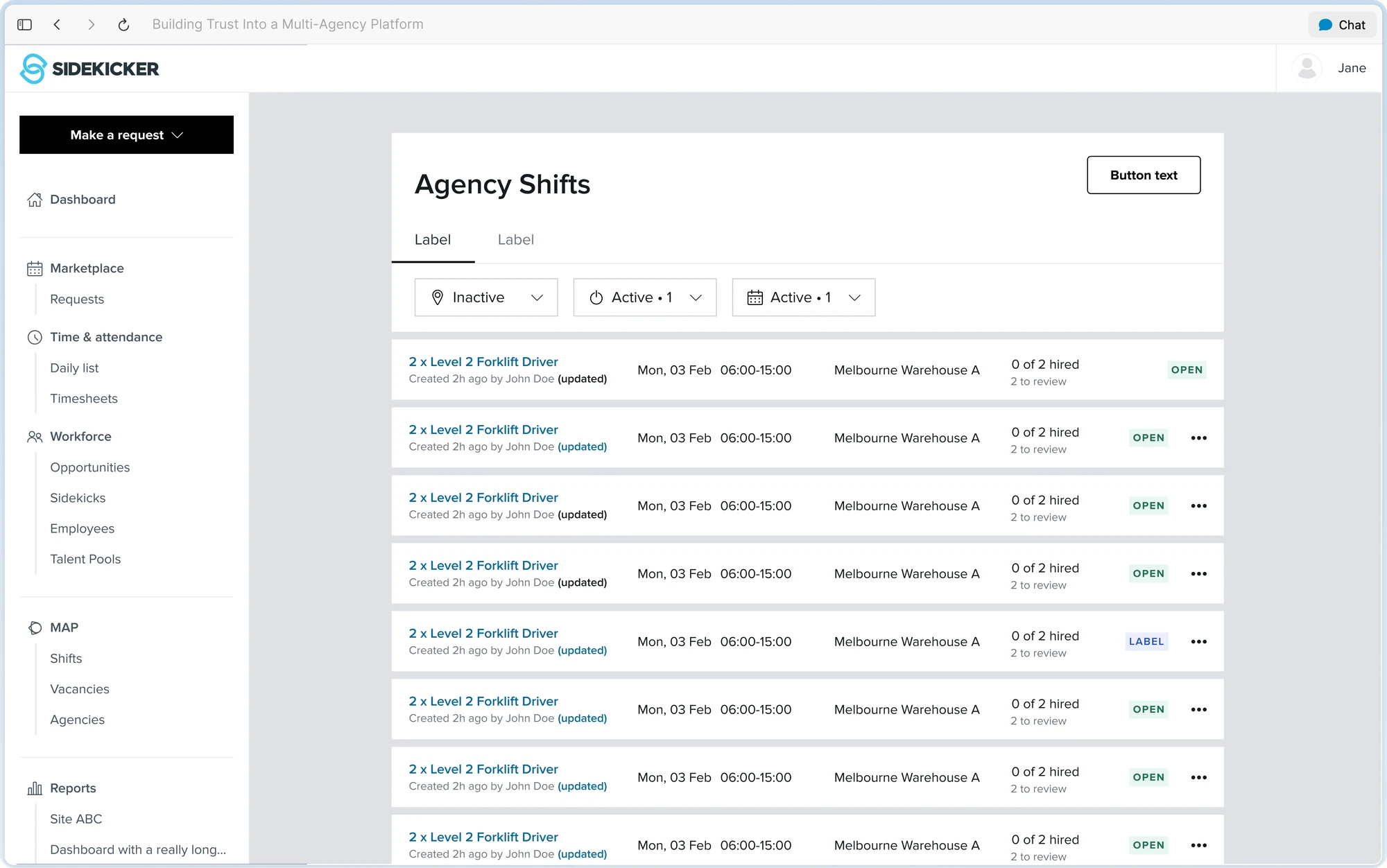
Clients juggled several agencies by email and spreadsheet, but Sidekicker could only give them control over its own workers.
The brief called it a filtering problem. It was a trust problem — no feature answers why a competing agency would participate at all.
Gave the agency side its own identity rather than a disclaimer, and compressed discovery into a facilitated three-day sprint against a six-month MVP.
Agencies engaged at 55%, against 60% for the clients who asked for it — the side with least reason to trust it, behaving almost like the side that requested it.
Clients could control Sidekicker’s workers,and nobody else’s.
Mid to large clients were juggling several agencies at once. Sidekicker’s platform gave them real control, but only over its own workers. Everything else was manual: a separate request to each agency, mostly by phone, and no reliable way to know who turned up, who’d been withdrawn, or whether they were compliant.
The brief: an MVP by Q4, six months away, to create and manage job requests and agency workers in one platform. Success at launch was narrow: at least three committed early adopters, who would become design partners.
Six months, no time for a long handover,so I compressed discovery rather than cutting it.
I ran workshops, interviews and stakeholder sessions before touching a screen. Four findings shaped everything that followed.
A lot of the current processes dealing with different agencies are manual. There is little to no transparency about the workers being submitted by agencies. Communicating across multiple agencies in different channels gets messy and confusing. Managing workers submitted by different agencies is a genuine challenge.
Checked what research already existed before commissioning more
Before inviting clients, I checked with the Head of Design whether interviews had already been run. They had, with clients who’d asked for exactly this. Reusing them bought back time, and let my interviews go after what wasn’t known.
Led a three-day design sprint to buy back the time we didn’t have
So I proposed and facilitated a three-day design sprint: thirteen people across engineering, design, product and QA, working through the challenge, the solution, then a prototype.
Design sprint
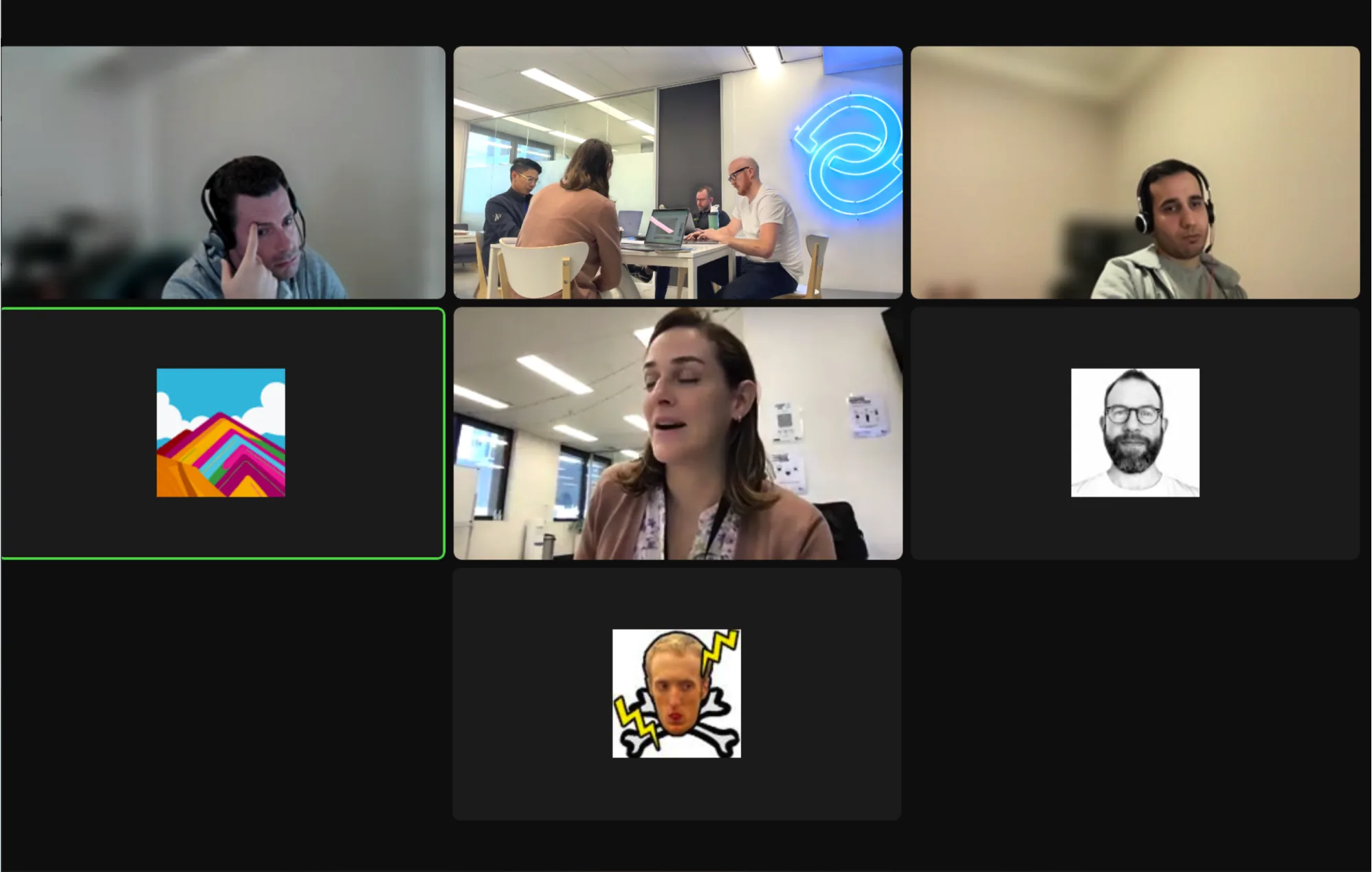
Thirteen people worked remotely and in the room on one shared board.
I also brought in three subject-matter experts who dealt with multi-agency staffing every day, so their reality was in the room while decisions were made, not reviewed afterwards.
Discovery
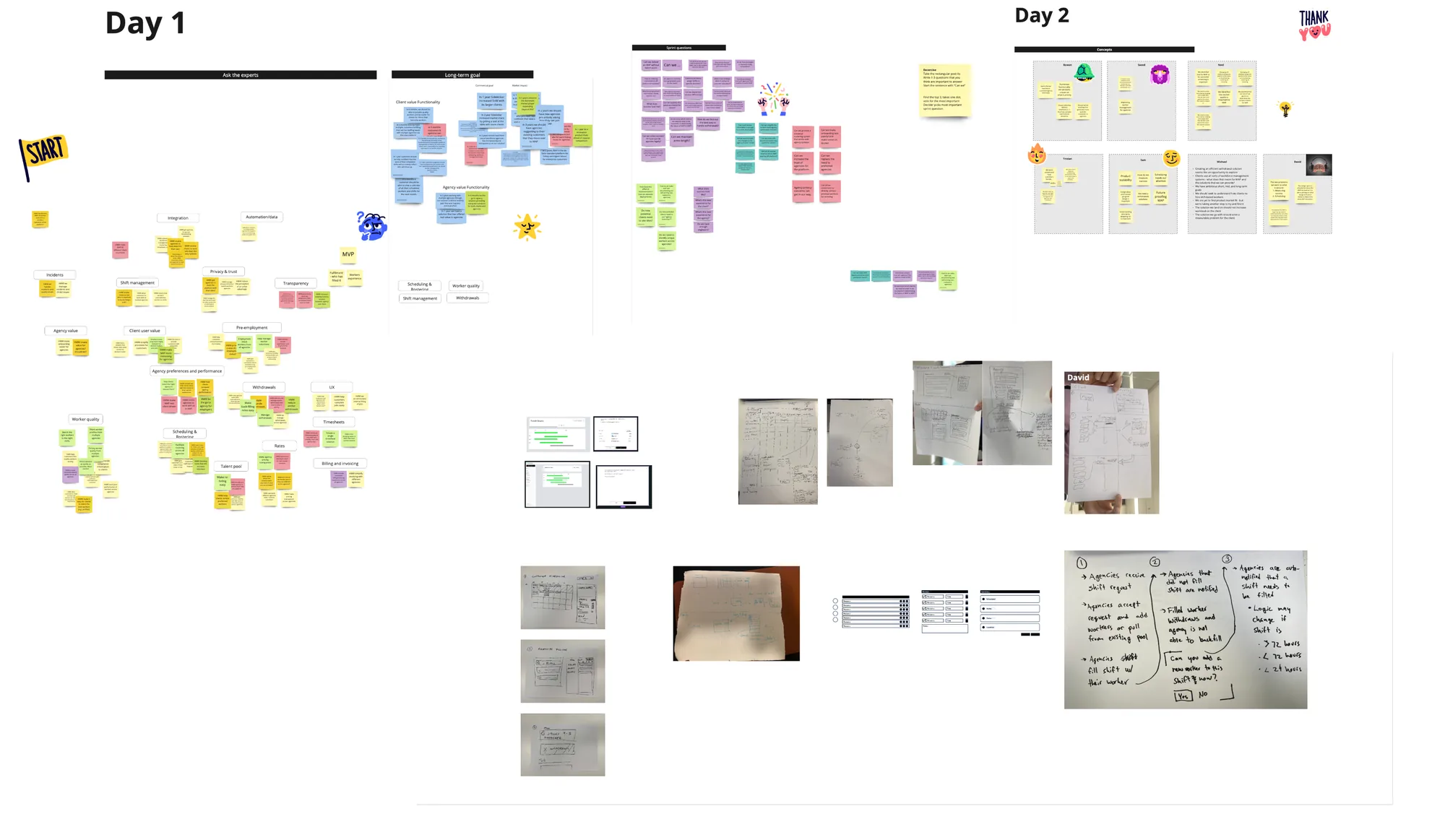
Day 1 mapped the opportunity; Day 2 turned it into concepts.
The brief said filtering.The problem was trust.
The instinct was to use Sidekicker’s platform as the blueprint: same control, extended to every agency. But agencies had to use MAP too, and they knew exactly whose platform they’d be logging into.
The actual question was why a competing agency would participate at all, and no feature answers that. Perceived independence had to be designed for like any other requirement, or the client side would launch into an empty marketplace.
Agency identity
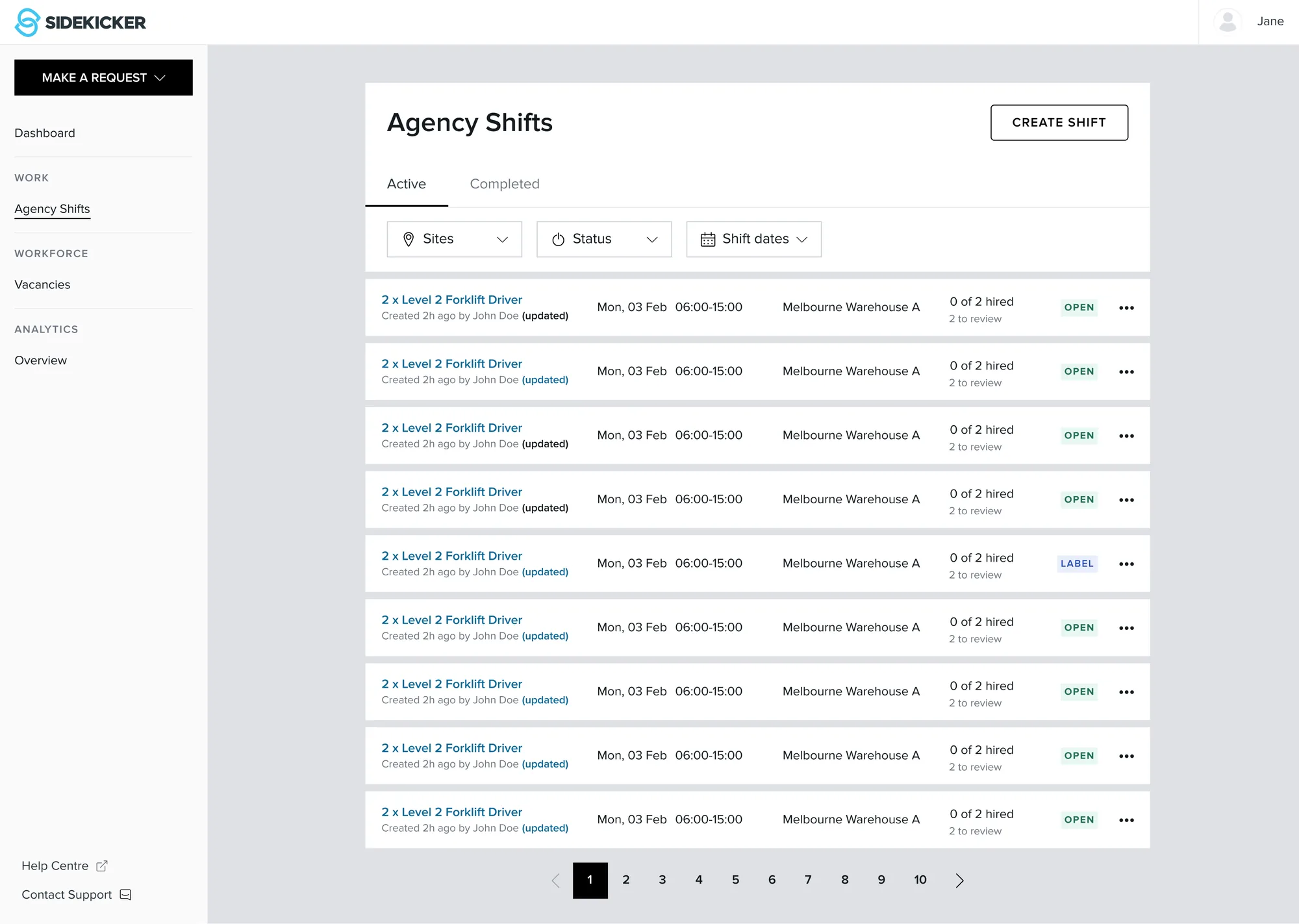
Its own identity.
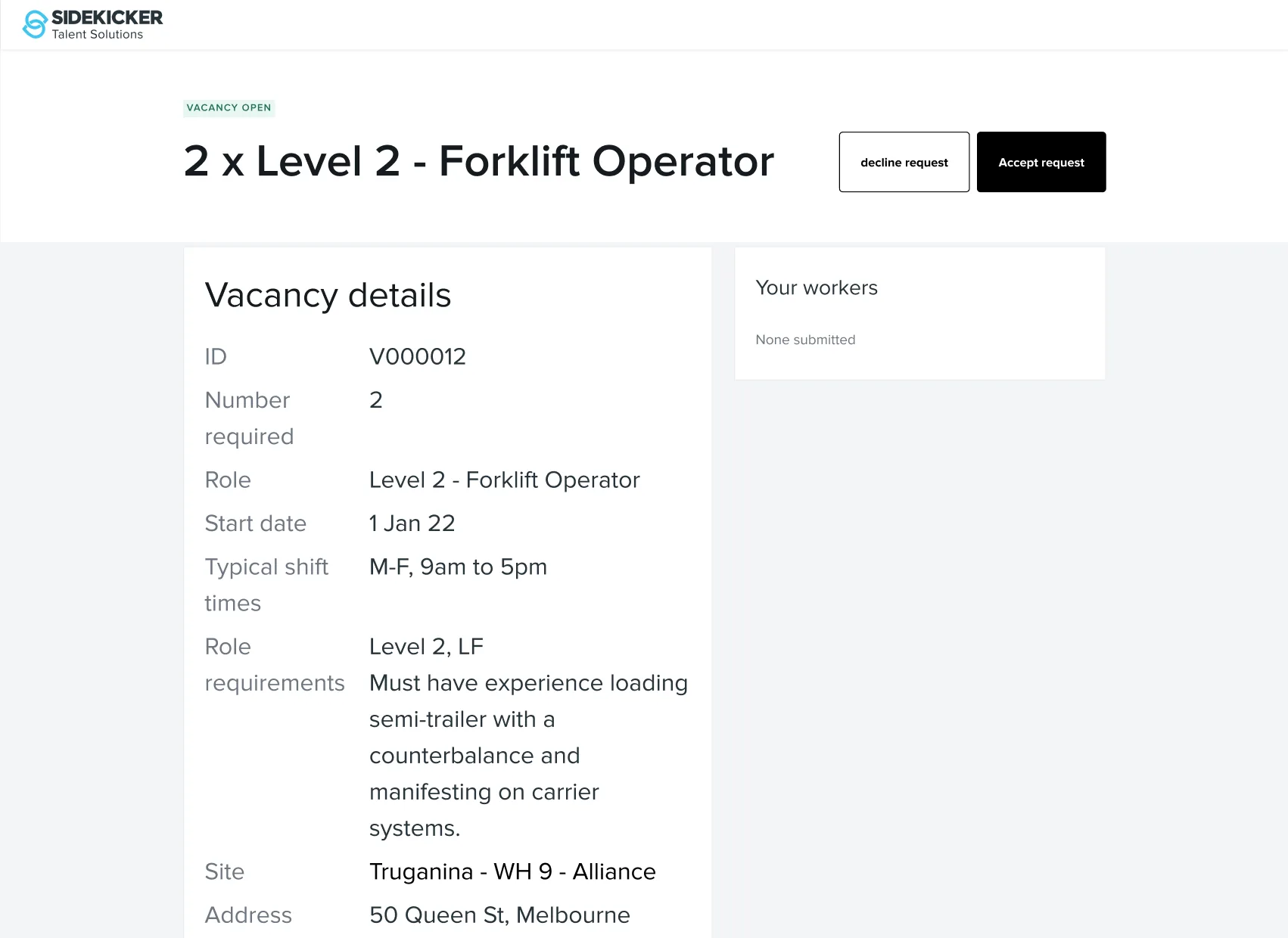
The agency platform keeps familiar foundations and its own identity. The supporting Sidekicker view shows the same structure in the original brand.
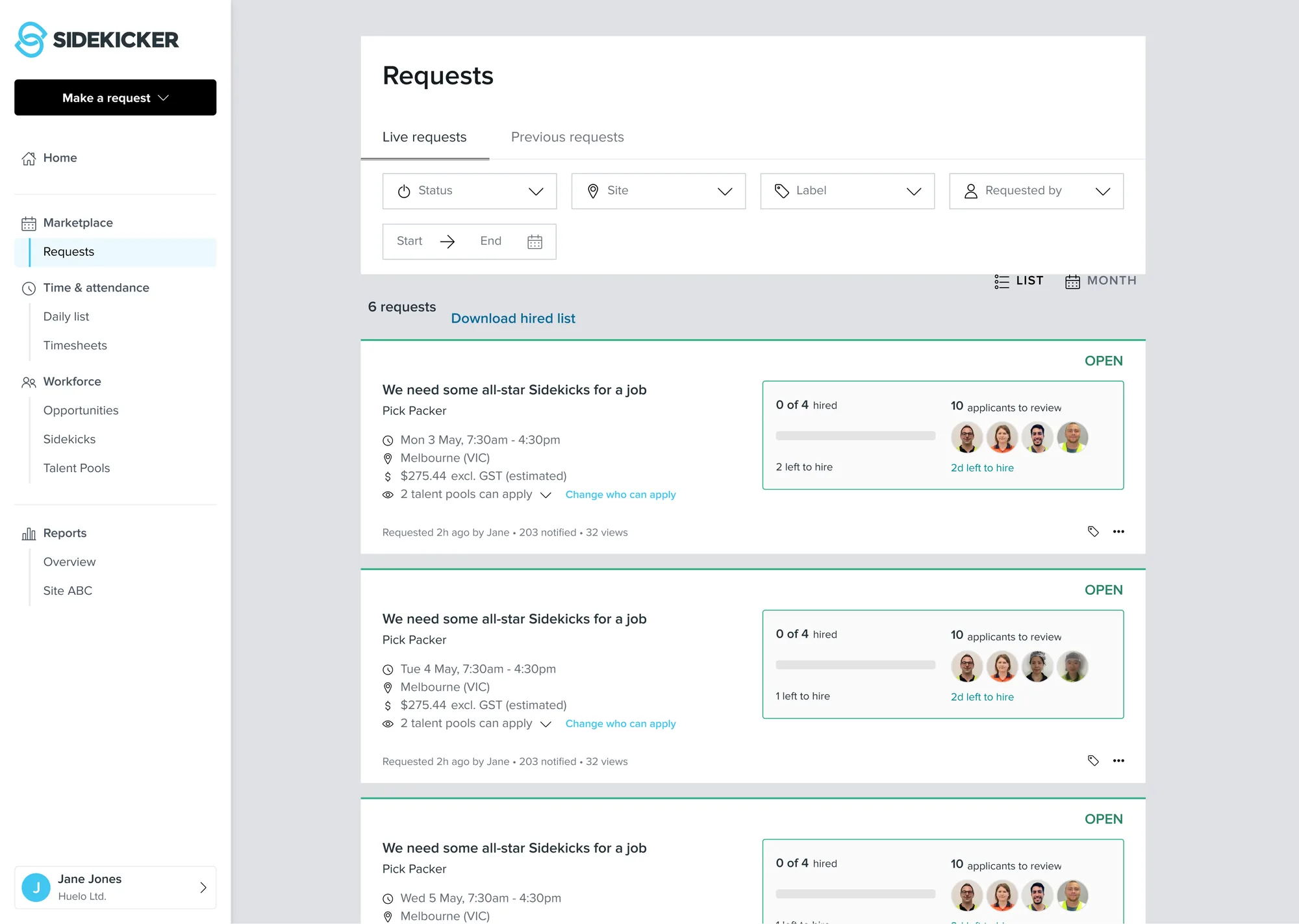
Familiar for clients,its own identity for agencies.
Using Sidekicker itself as the blueprint — deliberately
Clients already knew Sidekicker, so the client side stayed familiar, and its known pain points could be fixed from day one. I built it on MARI, Sidekicker’s design system, contributing the new components MAP needed, like the time picker and updated blank states.
Solving the trust problem with a separate identity, not a disclaimer
The agency side was deliberately different. With the business’s approval we commissioned a new logo for it, visually separate from Sidekicker on the same MARI foundations, so agencies saw their own tool, not a competitor watching over their business.
Agency platform
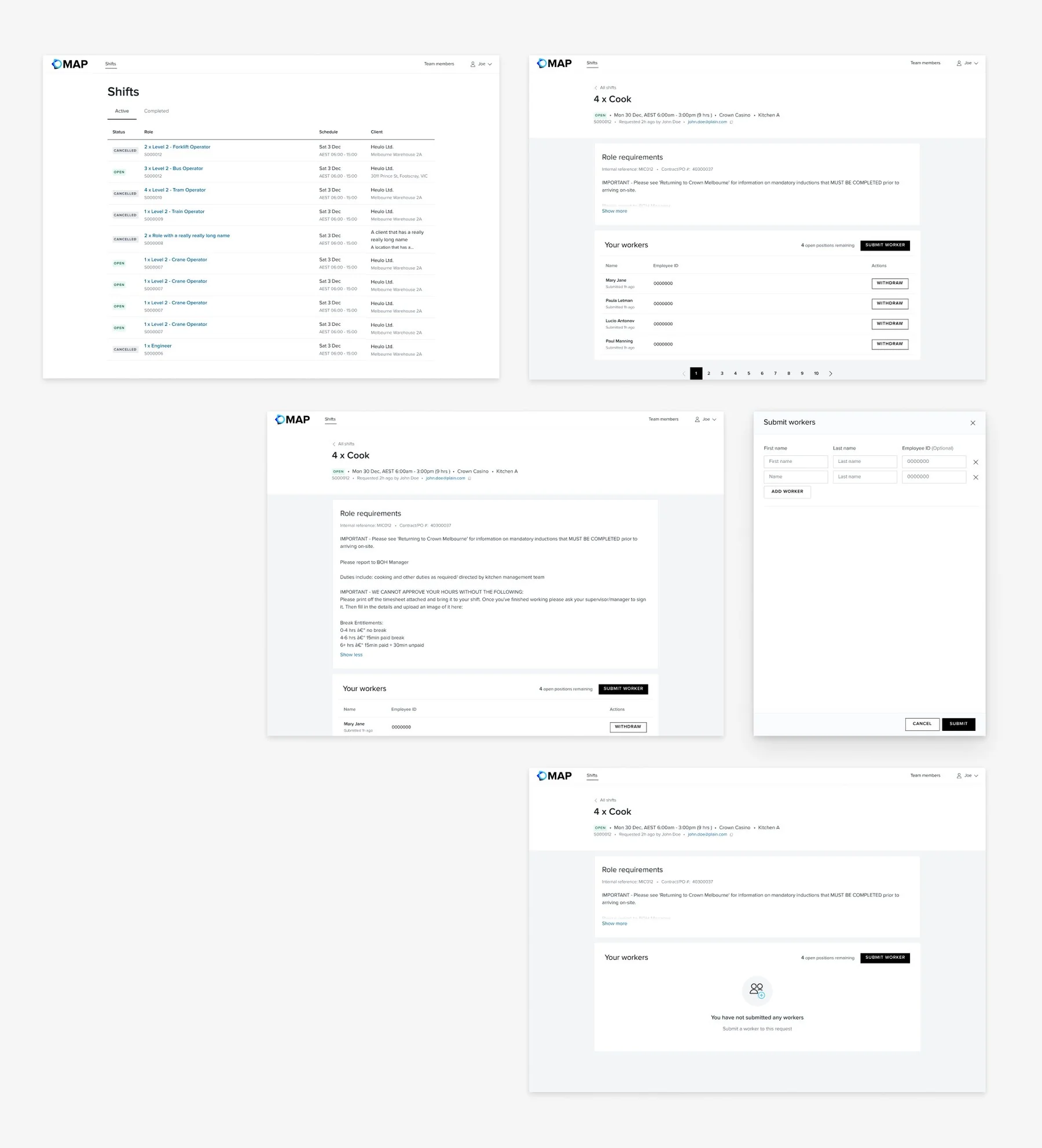
Two scope decisions inside the core screens
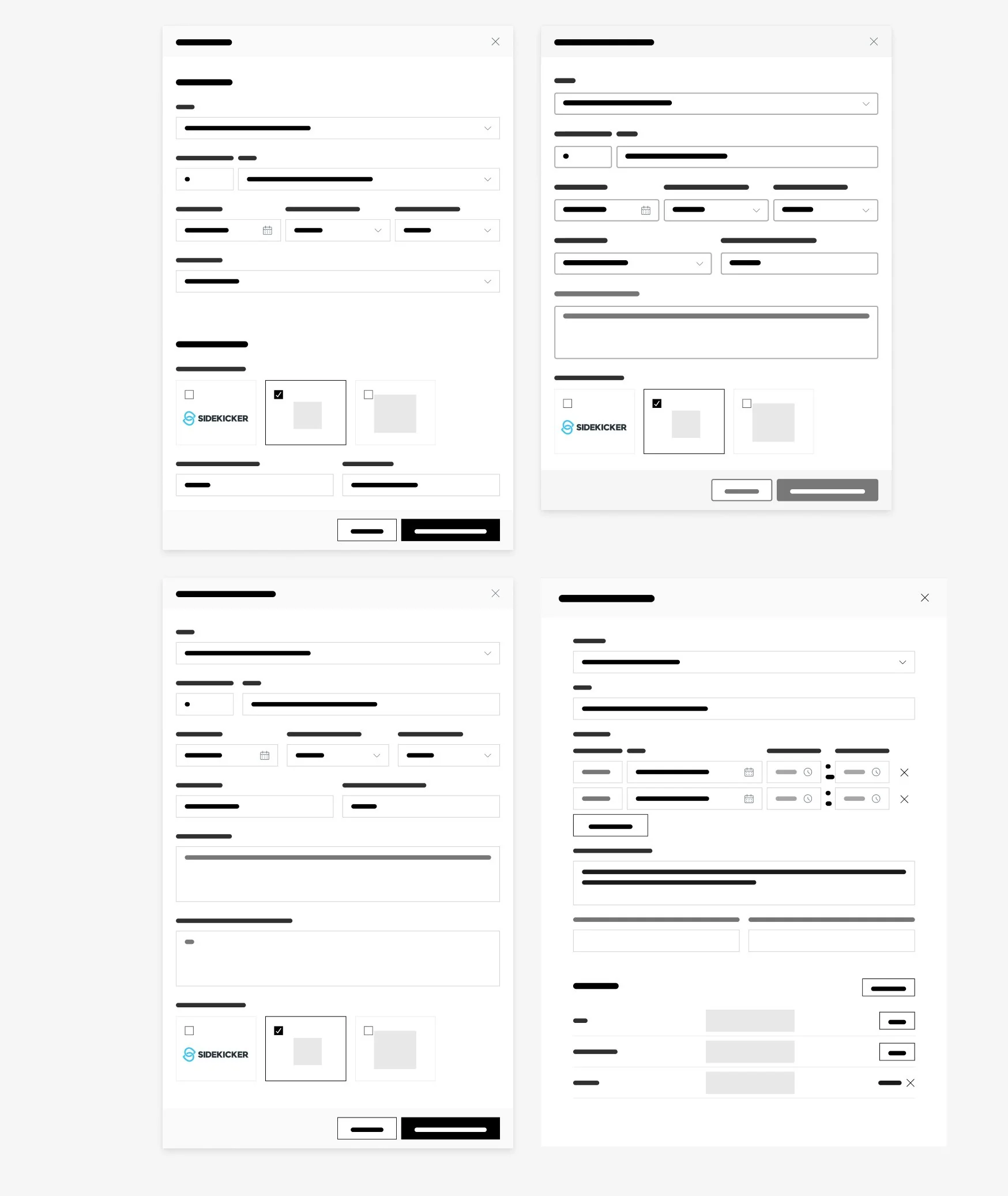
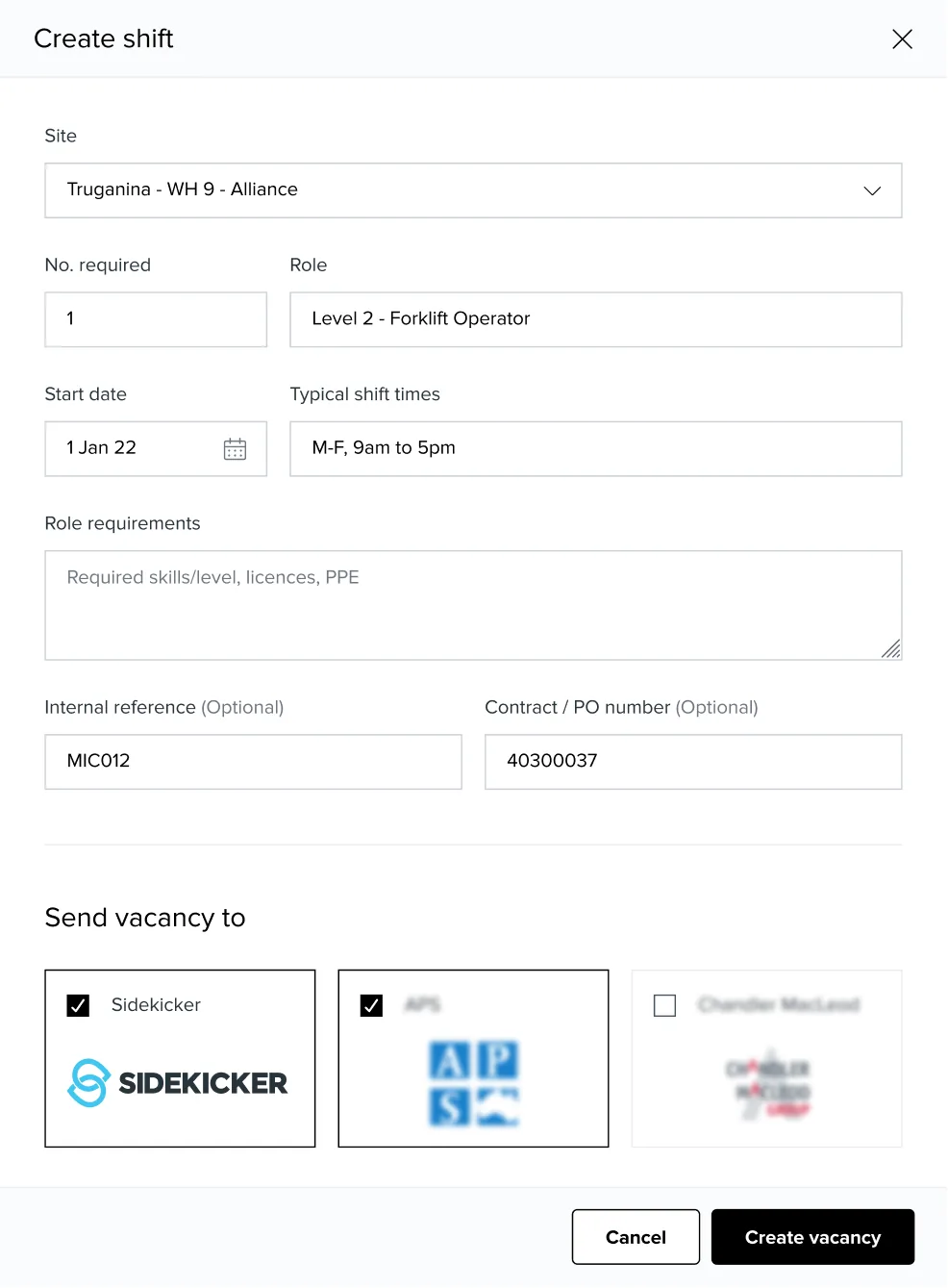
The request form is where a client posts a job. I designed it as a modal, not a page, kept deliberately minimal. The MVP shipped a slide-over against the deadline, and the refinement milestone brought the modal back. I cut a cost estimate: pricing it properly meant asking agencies or clients to disclose commercial terms neither would hand over.
No worker profiles in the MVP. The list surfaces exactly what a client needs for the hiring call, without a full profile system this early.
Exploration
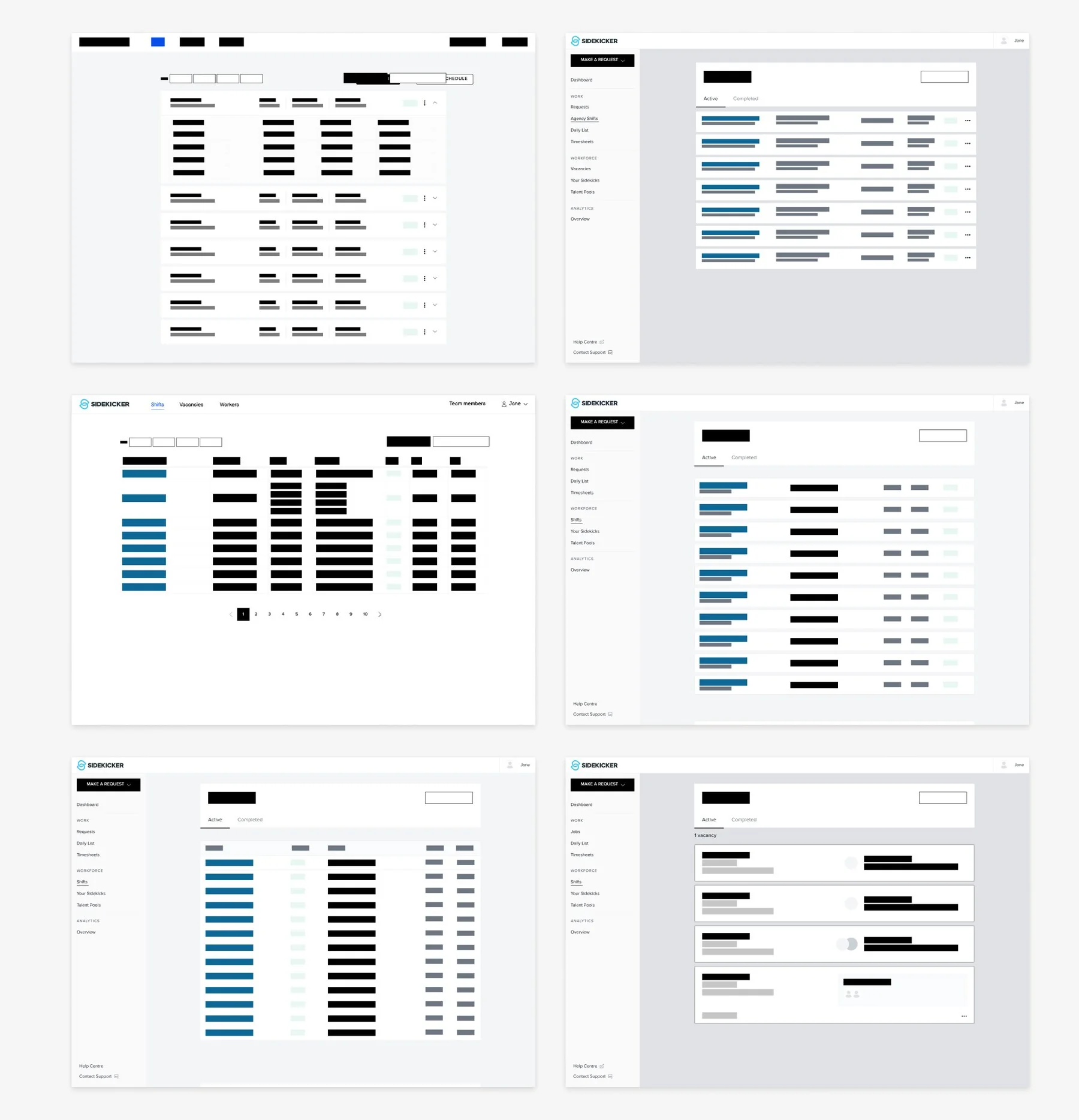
Wireframe explorations of the job feed, request form and worker list.
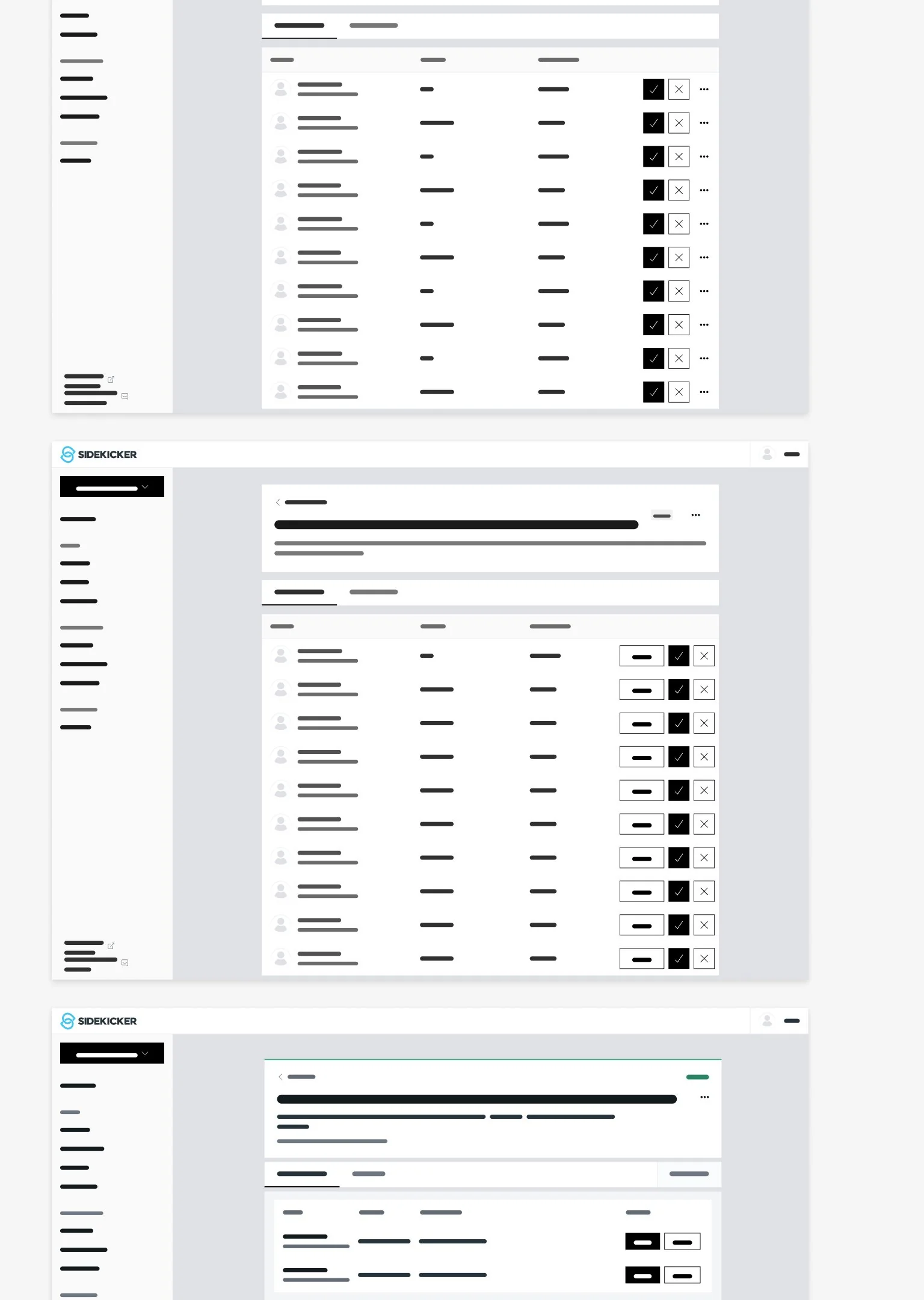
Testing the one decision the team couldn’t agree on
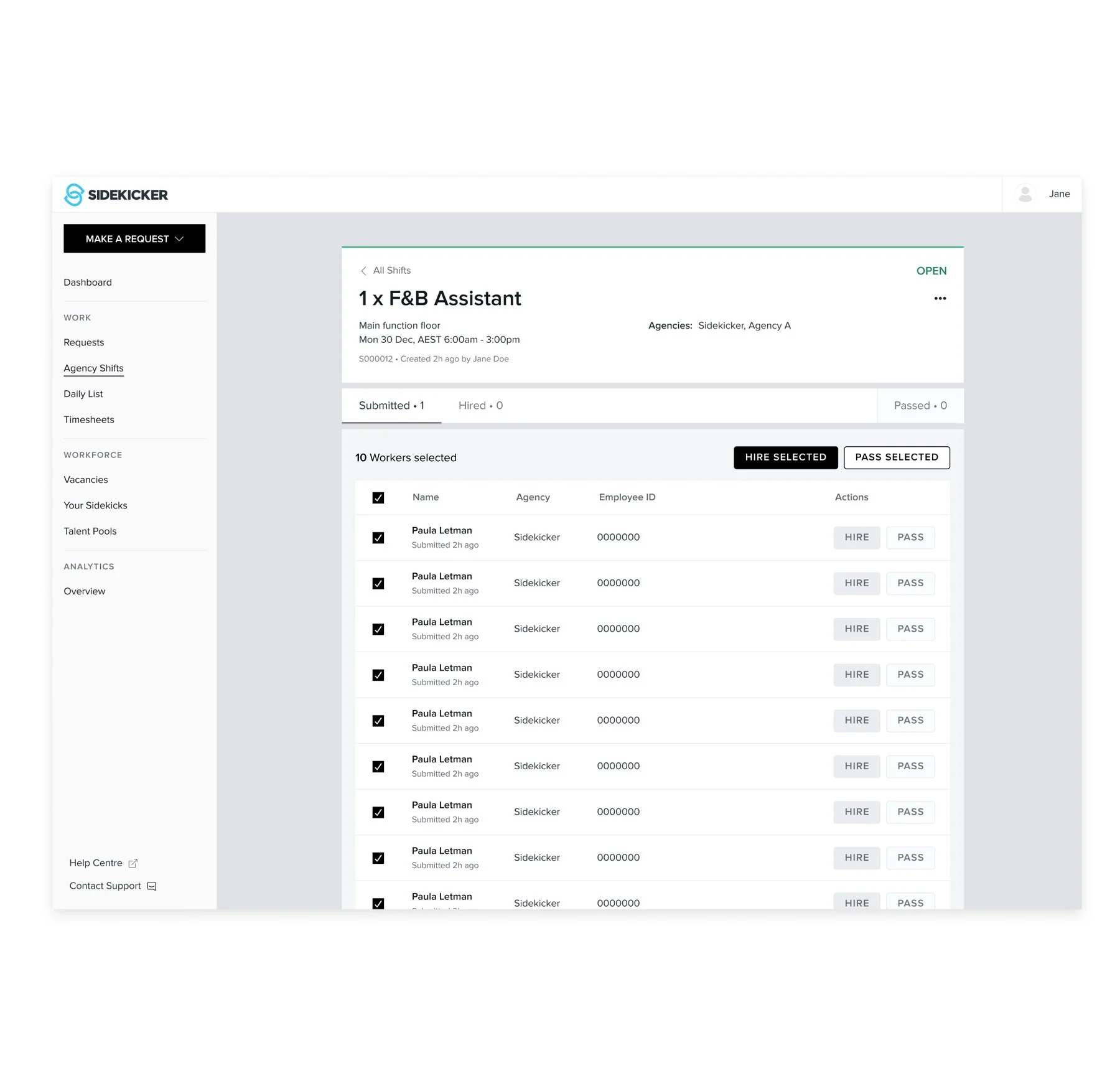
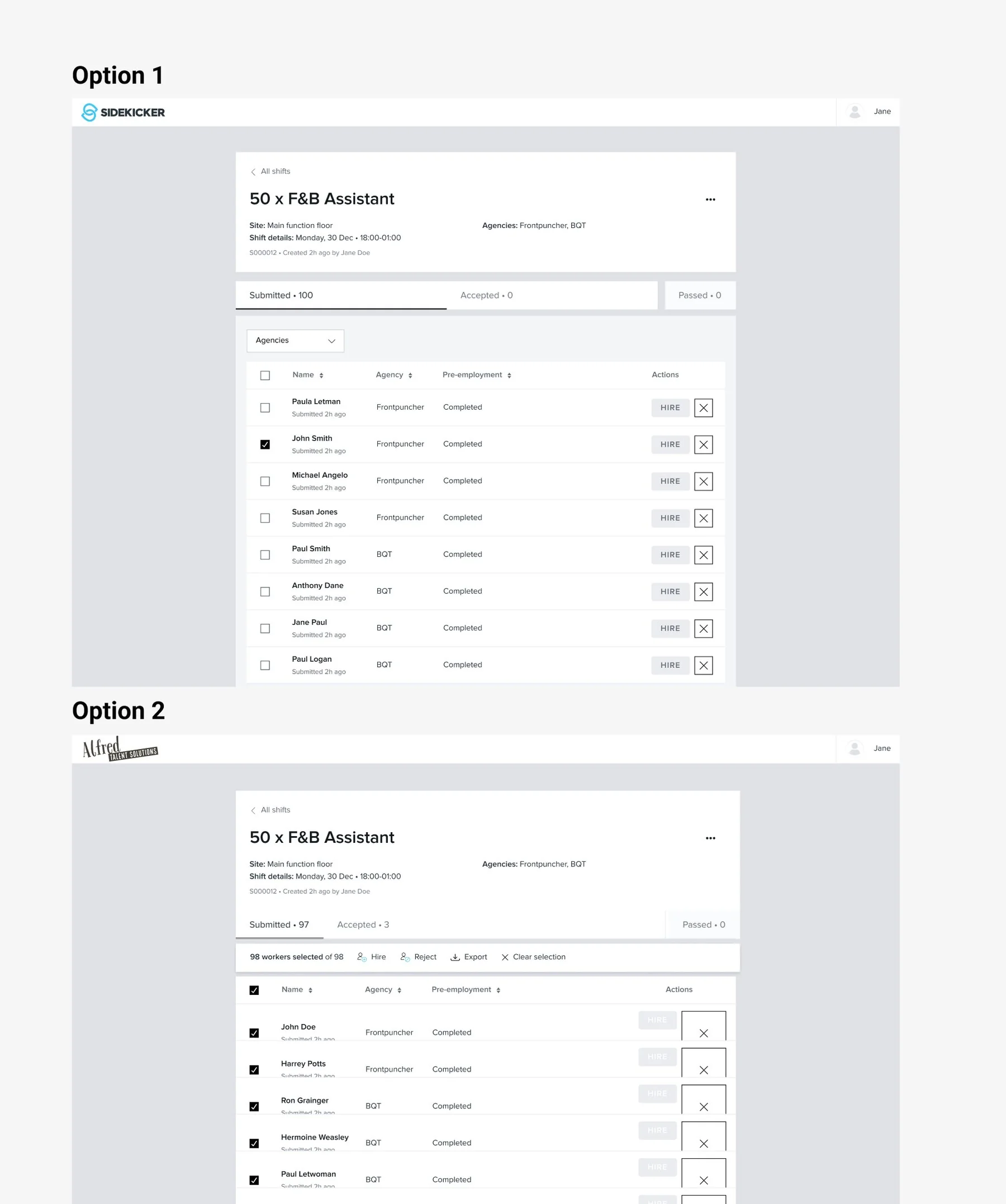
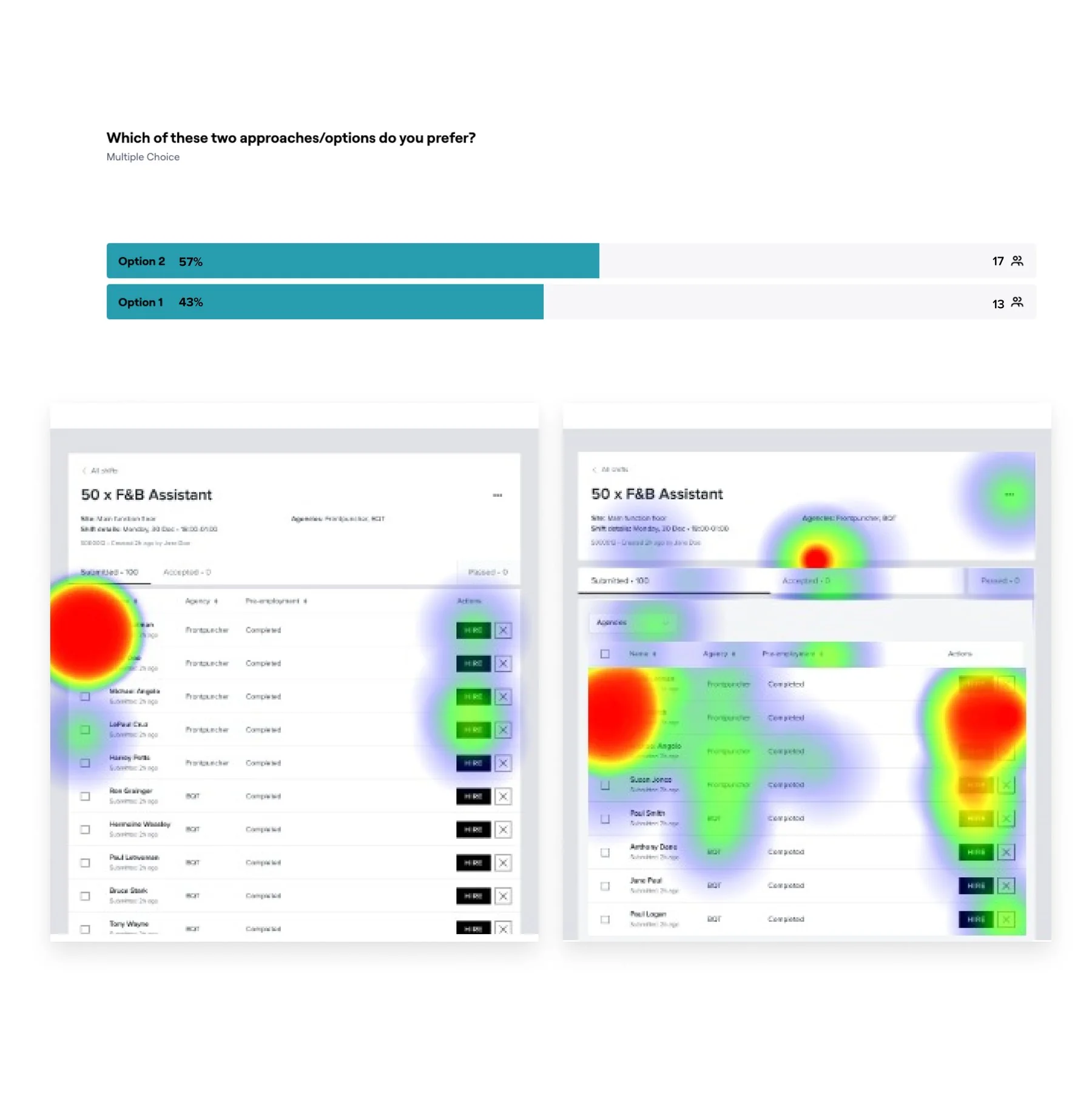
Bulk actions split the team between two similar concepts, so I tested them in Maze: 30 participants, with the option order reversed between groups. The vote went 57/43 to Option 2, a Gmail-style toolbar. The usability numbers were clearer: about 13% misclicks and 8 seconds, against 20% and 20.6 seconds for the WordPress-style dropdown.
I built the final design around the strengths of both, rather than just shipping the winner.
Bulk actions
The vote went 57/43 to the toolbar; the heatmaps shaped a hybrid of both.
An email system built from someone else’s idea
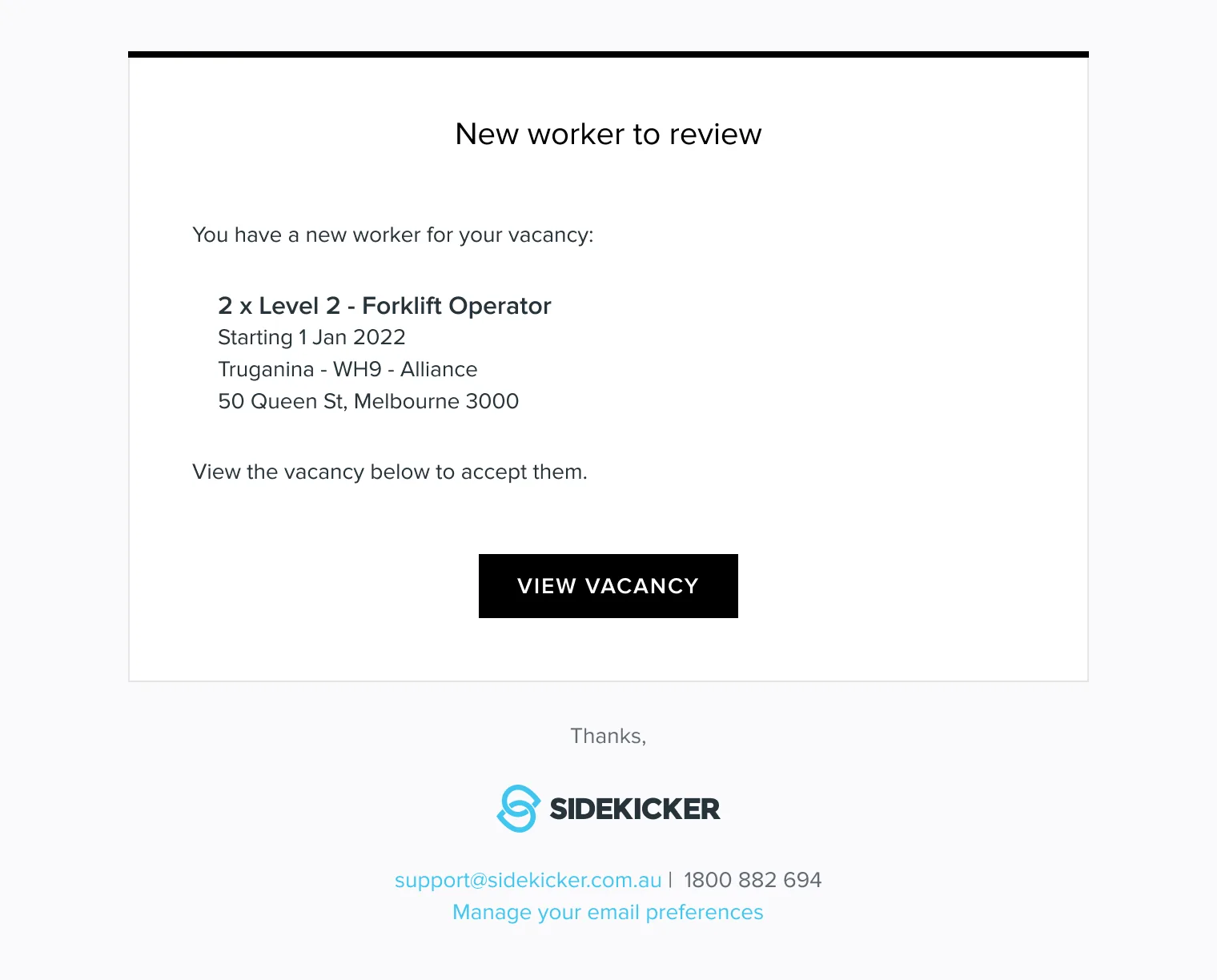
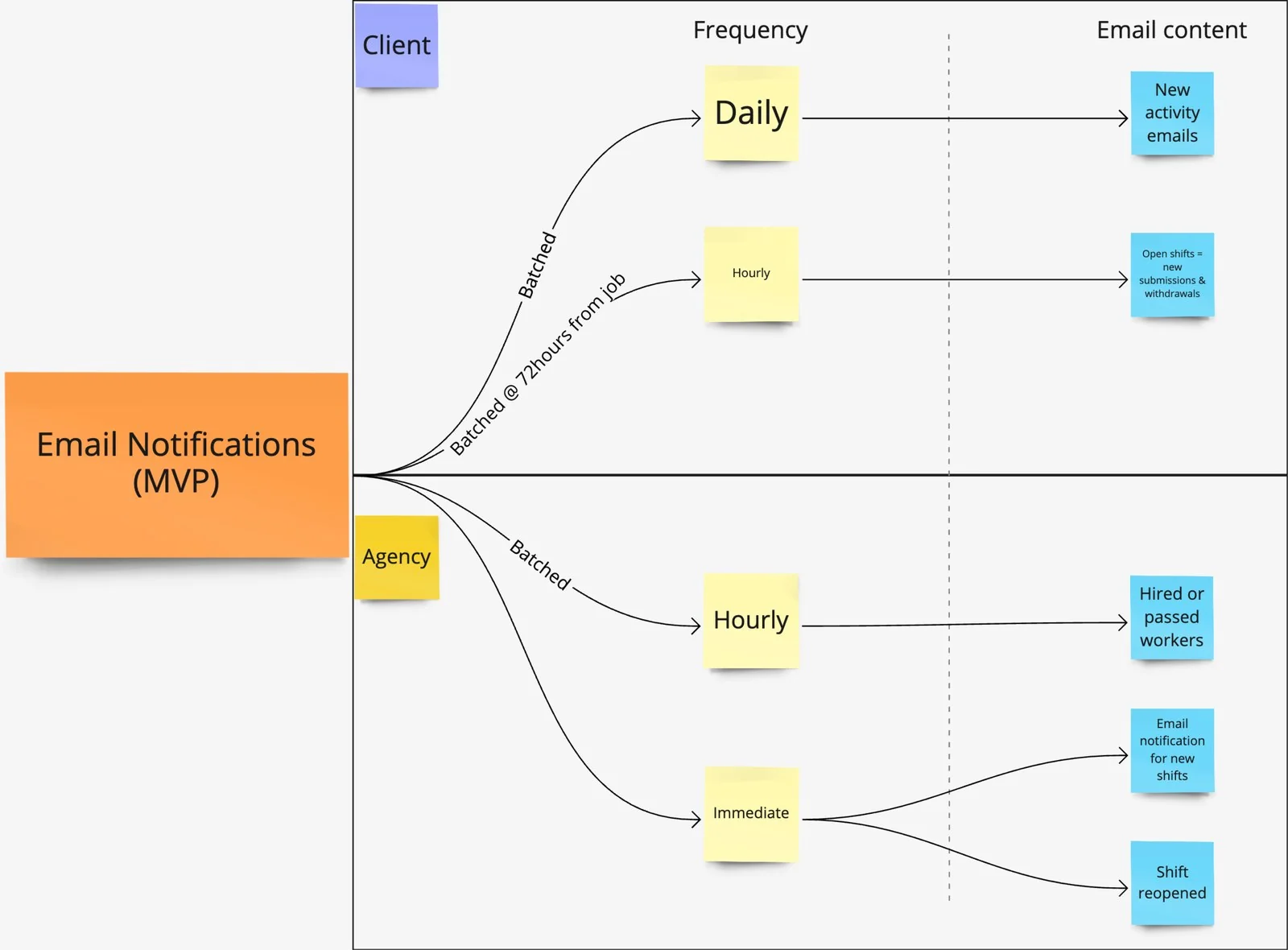
The notification redesign started sideways: a colleague was exploring email summaries for another feature, and it was the right shape for MAP. With the PM, Head of Design and engineering, we set three frequency buckets (daily, hourly and immediate), split for clients and agencies by how urgent each update was.
Notifications
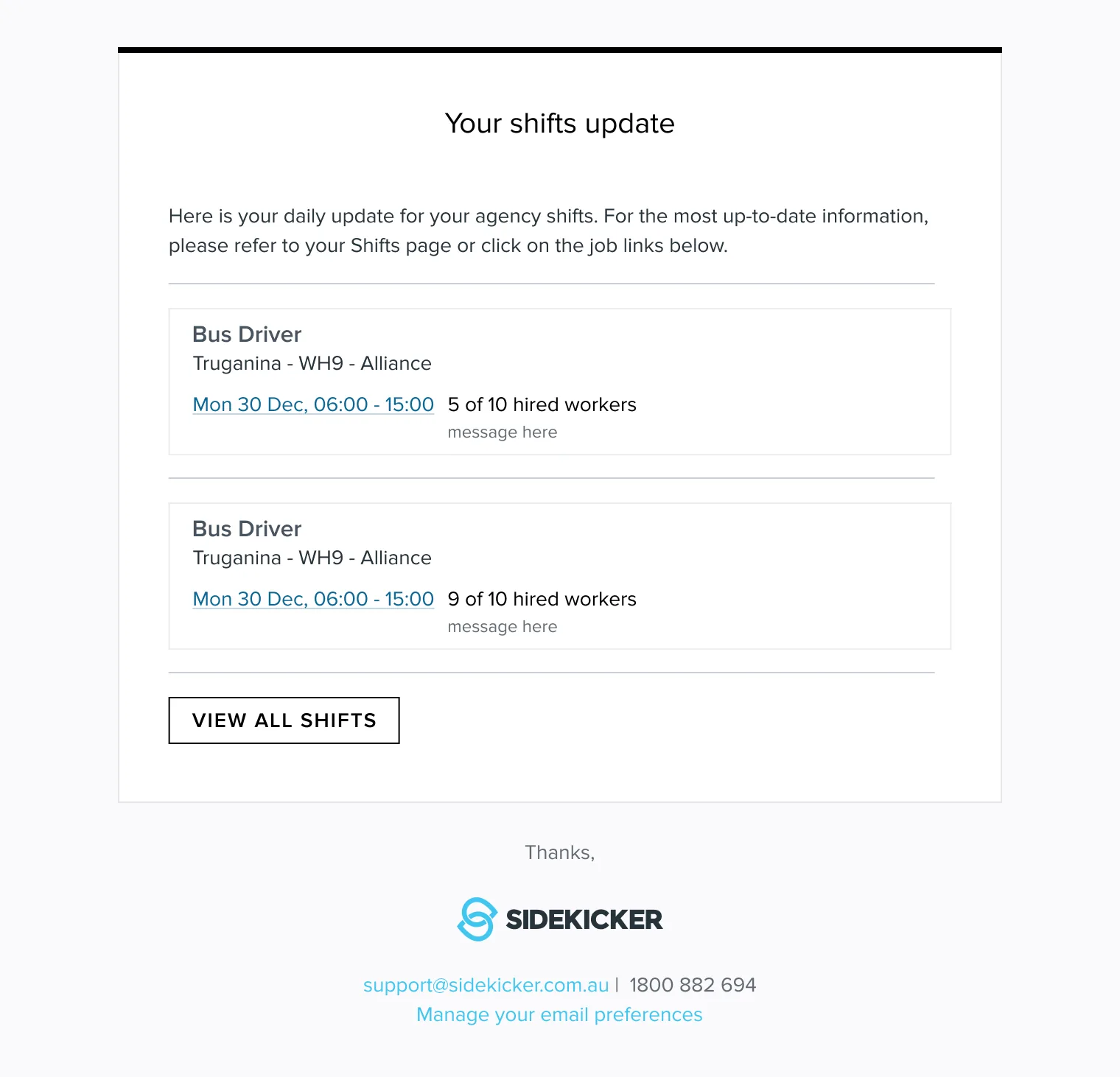
“New worker to review” describes the system. “Your shifts update” describes what the reader needs.
Client demos were the test,and agencies came in with them.
Client demos doubled as testing. For most clients it was their first real look at MAP, so I got real reactions, and the questions they actually had rather than the ones I assumed.
Agencies came in with their clients, so their feedback arrived alongside, but indirectly: support tickets to account managers, relayed to us. That limited how directly the agency side could be tested.
Five milestones,with engineering in the room throughout.
Five milestones: the first three, plus a 3a, for the core, and the last two for refinement and quality-of-life features like bulk actions. Engineers were in the design process throughout, not just at handoff: platform limits, feasibility, QA and open brainstorming.
Delivery
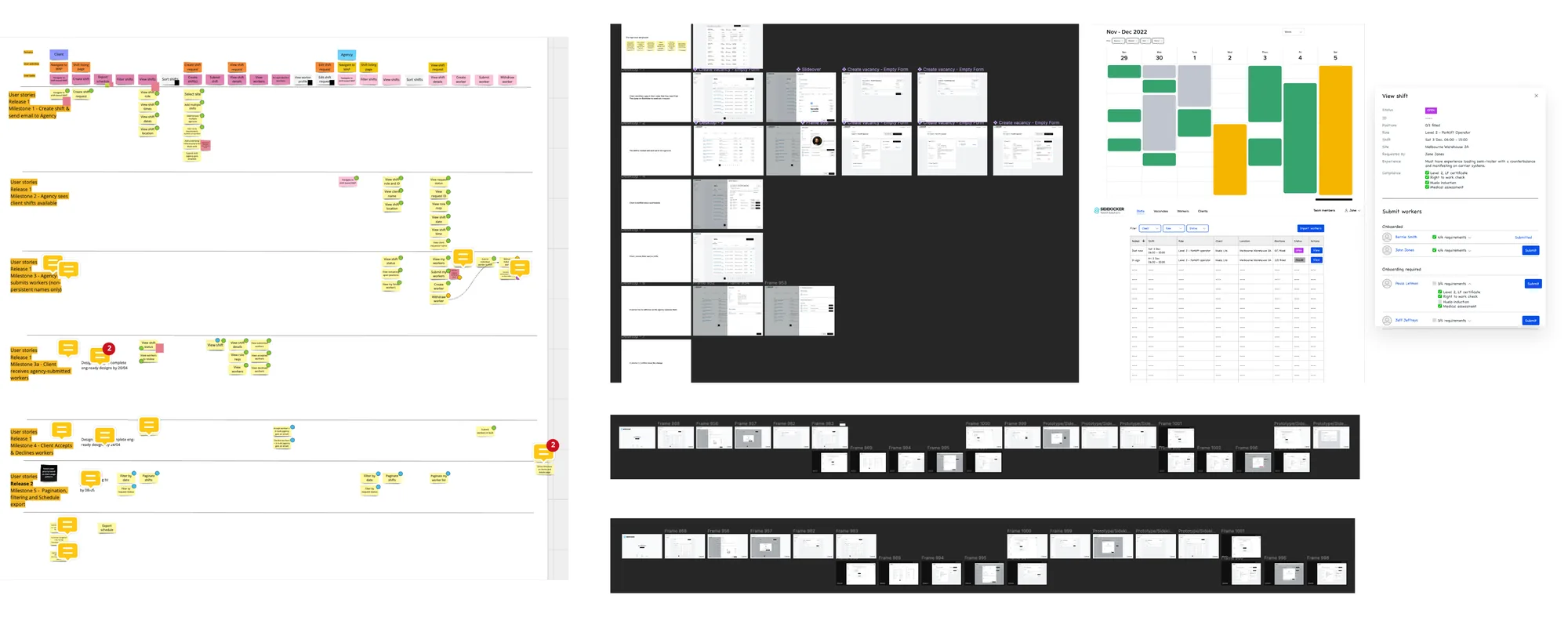
Three milestones covered the core platform; two covered refinement.
Held to a checklist, not an intention
Both platforms held to the design system’s grid at every breakpoint. Accessibility sat on the QA checklist every design cleared before engineering saw it, checked with Contrast and Stark rather than assumed.
Create request
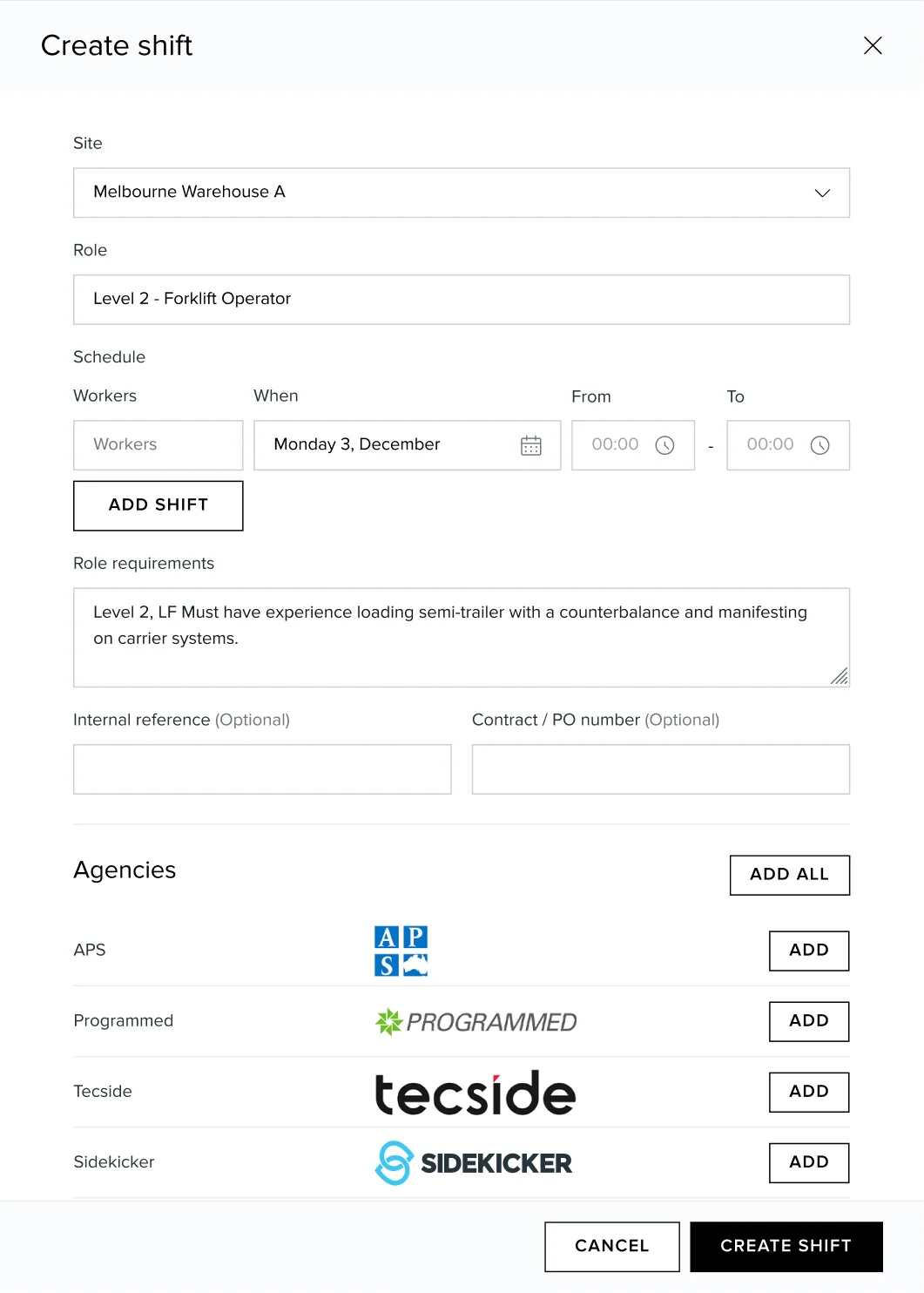
Create Request: a slide-over in the MVP, then a modal with the agency selector.
Request details
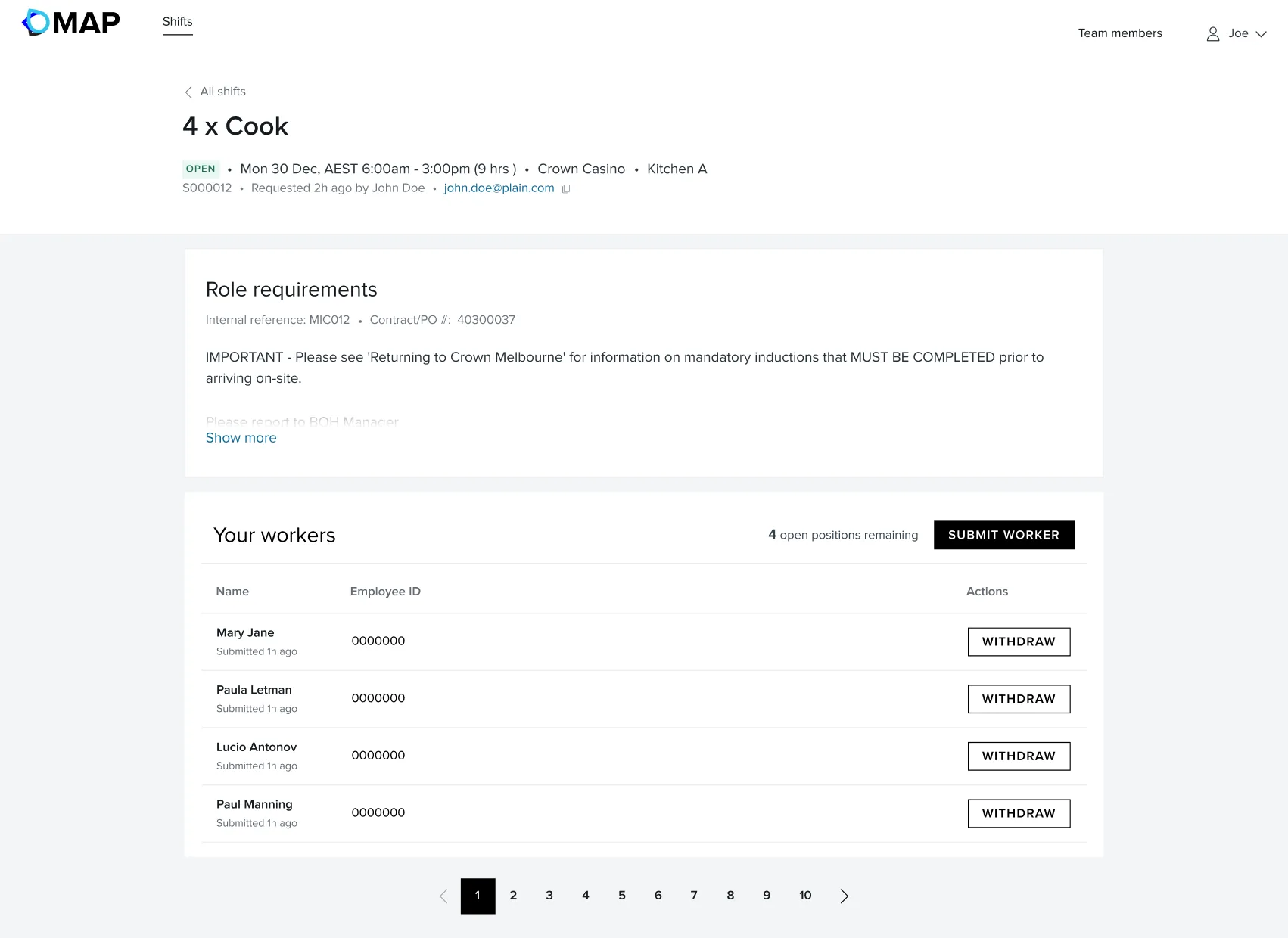
Role requirements got size and a collapse, not more labels.
Responsive design
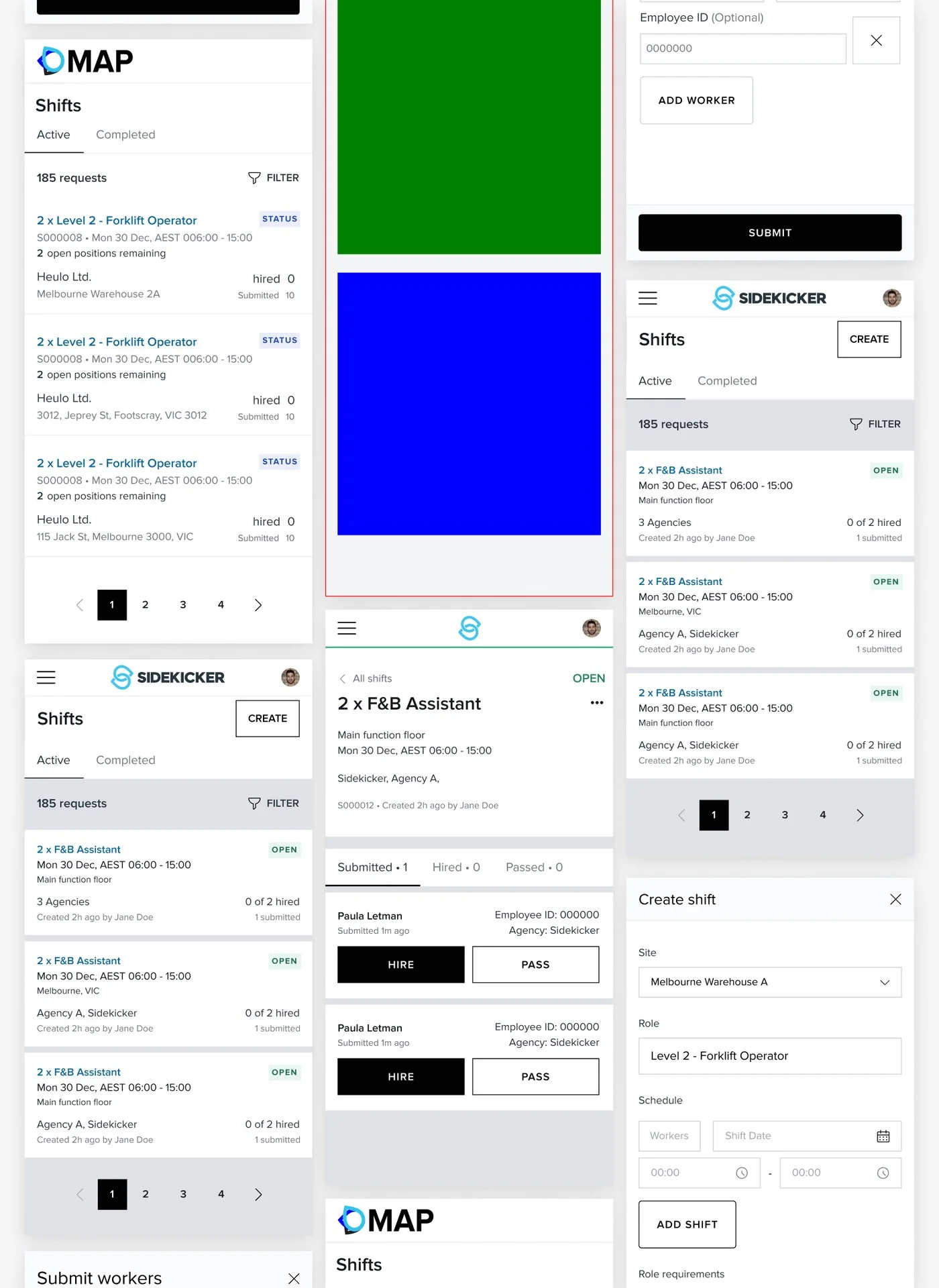
Both client and agency experiences follow the same responsive design-system spec.
Around 2,200 businesses, against a target of three.Agencies activated almost as often as clients.
Success was three committed early adopters. Two months after release, the last figures I measured myself, 3.8% of Sidekicker’s client base had opted in, with 60% client and 55% agency activation, tracked in Amplitude by requests made and completed.
Adoption kept growing after I left. The later figures were relayed to me: 5.3% of the client base, roughly 2,200 businesses, with client activation at 63.8% and agency activation at 59.3%.
Agencies, the side with the least reason to trust it, activated almost as often as clients. Clients bring their own agencies, so some of that is client pull, which is why the claim is narrow: client pull brought agencies to the door, and the separate identity was built to stop them walking back out.
Shipped
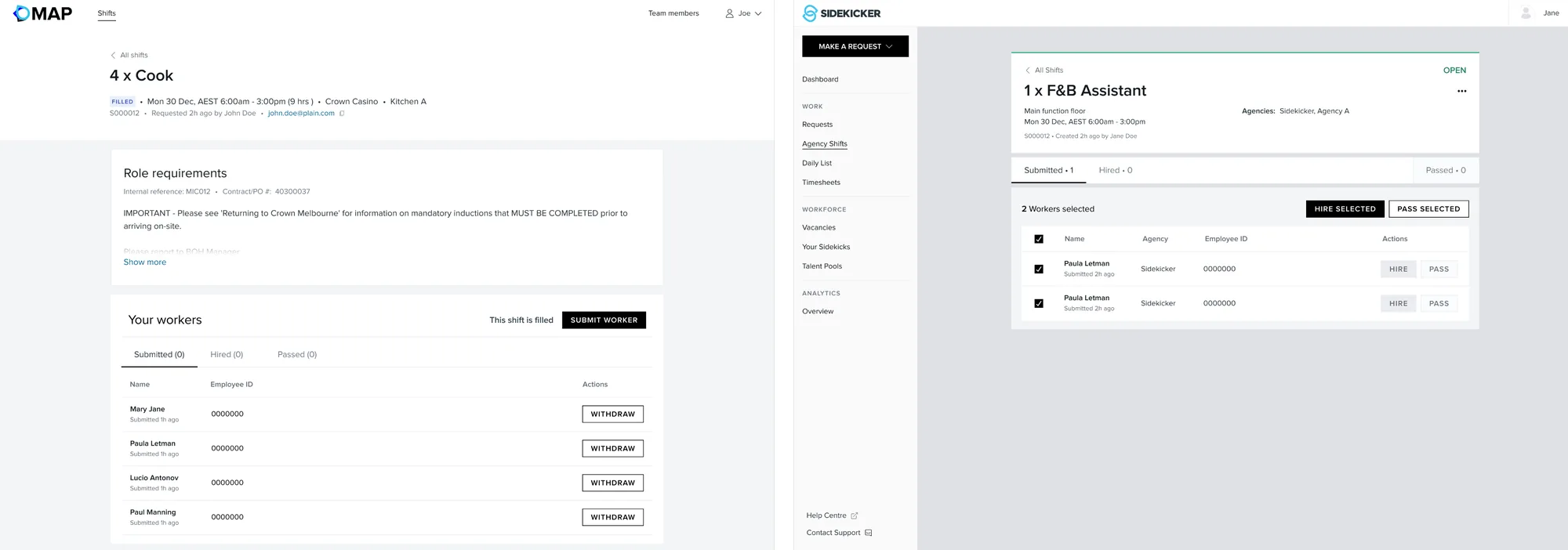
Agencies manage their workers; clients choose across every agency.
One call I’d stand by,and the research gap I’d close.
- I’d stand by skipping personas. The client base spanned industries with very different needs, and the timeline didn’t allow for them, so the system had to be simple enough for anyone to pick up. With more time, I’d still want them.
- Agency research was the harder gap. Agencies were hesitant to work with us directly, so there were fewer chances to test with them. The plan was to keep that discovery going after launch, not treat research as a phase that ends.